top of page
CTO · Industrial AI · Technical Leadership
Zeeshan Karamat


Why a One-Pixel Shift Can Change a CNN Prediction
Why strided downsampling can make CNN predictions sensitive to a one-pixel shift—and what anti-aliasing can and cannot fix.
Oct 52 min read
What Does “Close” Mean? Mahalanobis Distance for Visual Defects
Why equal Euclidean distances can hide different kinds of anomalies—and how covariance, whitening, and Mahalanobis distance change visual inspection.
Sep 142 min read
Non-Blocking Isn’t Parallel: A PyTorch Detail That Matters
Why non_blocking=True removes a CPU-side wait but does not guarantee GPU overlap—and how pinned memory, CUDA streams, and batching make the difference.
Sep 101 min read
One Model, Many Cameras: Why Dynamic Resolution Matters in VLMs
How dynamic resolution helps VLMs handle images from different cameras—and why patch counts, preprocessing, and compute budgets still matter.
Sep 72 min read


Beyond AUROC: Evaluating Visual Anomaly Detection for Real-World Production
High benchmark performance does not guarantee a reliable inspection system. This article presents a production-oriented framework for evaluating visual anomaly detection across thresholds, distribution shift, error costs, latency, validation, and monitoring.
Sep 33 min read
How I Completed Udacity's Agentic AI Nanodegree in 6 Hours
It was a Sunday morning in Munich. I had a cup of double espresso in hand, my laptop open, and a simple question in my head: how fast can I actually finish this? Six hours later, I had my answer — and a Udacity Nanodegree certificate to prove it. The Backstory I'll be honest. I didn't set out to break any records. I'm the CTO and Co-founder of 36ZERO Vision, a Munich-based company that builds AI-powered quality inspection systems for manufacturers like Siemens, Bosch, and Mag
Feb 14 min read


The Future of Industrial Platforms: Evolving Toward Web-Based Ecosystems and Democratized Innovation
The Future of Industrial Platforms
Apr 13, 20254 min read
Unleashing the Power of 3D Datasets, Computer Vision, and Deep Learning in Additive Manufacturing NDT
NDT Additive Manufacturing #36ZERO Vision
Mar 30, 20254 min read
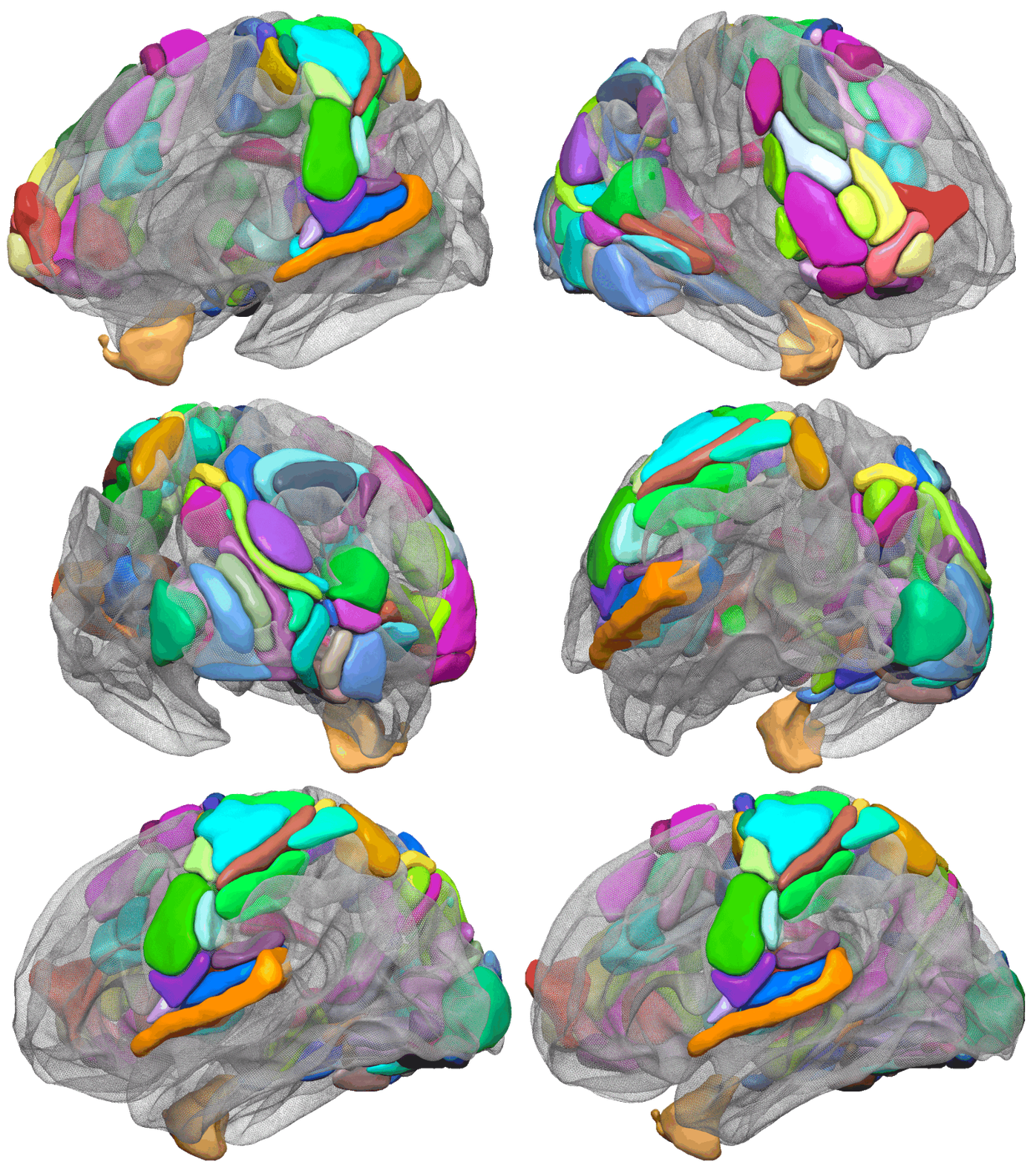
Unveiling the Brain in 3D: The Cutting Edge of Neuroscience Meets Computer Vision and Deep Learning
The Cutting Edge of Neuroscience Meets Computer Vision and Deep Learning
Mar 24, 20255 min read


The Impact of Resolution on AI Model Predictions and Strategies to Overcome Limitations
In the rapidly evolving field of artificial intelligence, the resolution of input data plays a crucial role in the accuracy and effectiveness of AI models. This blog post explores how resolution affects AI predictions and discusses various approaches to overcome resolution-related challenges. Understanding the Impact of Resolution Resolution, in the context of AI, refers to the level of detail in the input data. For image-based AI tasks, this typically means the number of pix
Sep 1, 20243 min read


Continuous Learning in AI: Overcoming Catastrophic Forgetting
As artificial intelligence continues to advance, one of the key challenges in developing truly adaptive AI systems is enabling continuous learning while avoiding catastrophic forgetting. This blog post explores the concept of continuous learning, the problem of catastrophic forgetting, and various approaches researchers are taking to address this challenge. Understanding Continuous Learning Continuous learning, also known as lifelong learning or incremental learning, is the a
Sep 1, 20243 min read


Continuous Learning in AI: Three Approaches for Daily Applications
In the rapidly evolving field of artificial intelligence, keeping models up-to-date and improving their performance is crucial. This post explores three powerful approaches for continuous learning in AI models: human-in-the-loop, active learning, and reinforcement learning. 1. Human-in-the-Loop: Leveraging Human Expertise Human-in-the-loop (HITL) is an approach that combines human intelligence with AI capabilities. In this method, human experts interact with the AI system to
Sep 1, 20242 min read


Soft NMS: Smoothing Out the Rough Edges of Two-Stage Object Detectors 🧐
Two-stage object detectors have been the backbone of computer vision for years, but even the best have their weaknesses. One of the most persistent issues is how they handle overlapping bounding boxes. Traditional Non-Maximum Suppression (NMS) can be a bit heavy-handed, leading to missed detections when objects get cozy. That's where Soft NMS comes in to save the day! 🎉 The NMS Problem: When Boxes Collide 💥 Imagine you're trying to spot a cluster of balloons in a photo. A t
Aug 9, 20242 min read


The AI-Powered Revolution of Quality Inspection: A Glimpse into the Future
The manufacturing landscape is on the cusp of a radical transformation, and artificial intelligence (AI) is poised to be the driving force. While quality inspection has always been a cornerstone of production, AI's emergence promises to redefine this essential process. In the not-so-distant future, we envision AI as the linchpin of quality assurance, revolutionizing everything from visual defect detection to predictive maintenance. AI: The Visual Quality Inspector Extraordina
Aug 1, 20242 min read


Preprocessing vs. Augmentation: Unlocking the Secrets of Top-Performing Computer Vision Models
Welcome, fellow engineers and AI enthusiasts! Today, we're diving into the dynamic duo that fuels successful computer vision projects: preprocessing and augmentation. These techniques are like the yin and yang of data preparation, each playing a distinct role in shaping your model's performance. Preprocessing: The Unsung Hero of Data Consistency Think of preprocessing as the meticulous housekeeper of your dataset. It ensures that every image is clean, tidy, and ready for your
Jul 17, 20242 min read


Scaling Your Deep Learning Ambitions with Ray: A Hands-On Guide for Engineers
Scaling Your Deep Learning Ambitions with Ray: A Hands-On Guide for Engineers
Jul 16, 20243 min read


Proxy Tasks: Supercharging Image Understanding with Unlabelled Data
In the world of image-based computer vision, labeled data is the gold standard. However, the reality is that most image datasets are vast and unlabeled. This is where the clever use of proxy tasks shines, providing a strategic method to train your AI models effectively before honing them on smaller, labeled sets. Let's delve into how proxy tasks operate and why they are a game-changer for tackling image understanding challenges. The Unsupervised Learning Puzzle Unsupervised l
Jul 7, 20243 min read


Synthetic Data for Computer Vision: Engineering Reality's Shortcuts (and Dead Ends)
In the world of computer vision, where data is the lifeblood of machine learning models, synthetic data has emerged as a tantalizing alternative to the labor-intensive process of collecting and labeling real-world images. But like any engineering solution, it's a trade-off – offering immense potential in some scenarios, while falling short in others. Let's dive into the details to see where synthetic data shines, where it stumbles, and how it's transforming the field. The All
Jun 23, 20243 min read


Revolutionizing Quality Inspection: Our Wild Ride from iPhones to Industrial-Grade AI 📱🤖
Hey everyone! 👋 As a startup founder, it's easy to get caught up in the hype of the latest technology. But sometimes, the most groundbreaking solutions arise from embracing limitations and finding creative ways to overcome them. That's the story of our journey into the world of industrial quality inspection. An Unlikely Starting Point 📱 When my co-founder and I first envisioned transforming quality inspection, we had a wild idea: to harness the power of iPhones. It sounds c
Jun 23, 20242 min read


From Microscope to Telescope: Expanding the View on Manufacturing Quality with AI
Let's delve deeper into how 36Zero Vision innovative quality inspection system is revolutionizing the manufacturing industry, breaking free from the constraints of traditional methods, and paving the way for a more adaptive, efficient, and precise approach to quality control. The Inflexibility and Cost of Tradition Traditional quality inspection systems in manufacturing are characterized by their heavy reliance on specialized hardware and a narrowly focused field of vision. T
Apr 10, 20243 min read
bottom of page